

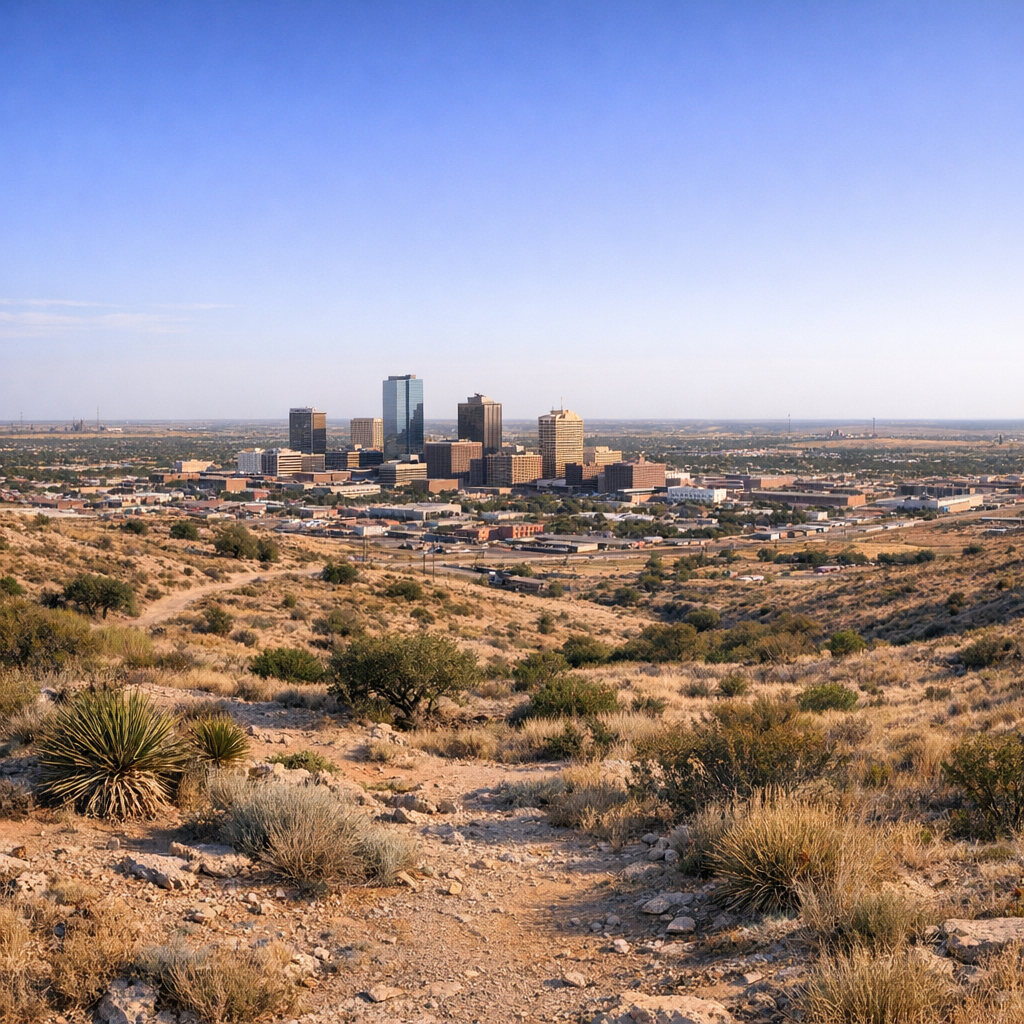
Midland, Texas, situated in the heart of the Permian Basin, experiences a semi-arid climate characterized by hot summers, mild winters, and low annual precipitation. Understanding these patterns is essential for residents and newcomers alike.
Seasonal Weather Patterns
Summer
Summers in Midland are notably hot and dry. Average high temperatures in July reach approximately 95°F (35°C), with nighttime lows around 70°F (21°C). Rainfall during this period is minimal, averaging about 1.37 inches (35 mm) in July. The low humidity levels, however, can make the heat more bearable.
Winter
Winters are generally mild, with average high temperatures in January around 59°F (15°C) and lows near 31°F (-1°C). Snowfall is rare, averaging about 2 inches annually.
Spring and Fall
These transitional seasons offer moderate temperatures and increased precipitation. May, for instance, sees average highs of 88°F (31°C) and lows of 60°F (16°C), with rainfall averaging 1.71 inches (43 mm).
Environmental Considerations
Midland’s semi-arid environment presents unique challenges. The region’s low annual rainfall, averaging 14.9 inches, necessitates water conservation efforts.
Additionally, the area is susceptible to dust storms, particularly in late winter and early spring, due to strong winds and sparse vegetation.
Understanding Midland’s climate and environmental factors is crucial for residents to adapt and thrive in this unique region.